By Lindsey Sikora, MSN, APRN, FNP-BC
This is the question I get before almost every first tox appointment — in the chair, in texts, in my DMs.
“How many units do I need?”
I know what you want. You want a number. You found a chart online — maybe even my unit map, which we made exactly because everyone asks this — and you want to do the math before you come in so there are no surprises.
I respect that. Surprises about money are the worst kind. So here’s the real answer, the one I give in the room.
From what I’ve learned — and I don’t pretend to be an expert on everything, I just inject faces all day and I pay attention — a chart can give you a starting point. It cannot dose your face. Here’s why.
What a unit map can — and can’t — tell you
A unit map shows you the areas we commonly treat: forehead lines, the frown lines between your brows (the “11s”), crow’s feet at the corners of your eyes, bunny lines, a lip flip, chin dimpling, and a few others.
What it shows you is where units go. What it can’t show you is your muscles.
Two people can sit in my chair back-to-back, both pointing at the same forehead lines, and need genuinely different plans. One person’s forehead barely moves. The other raises their brows every time they talk — and I can see that muscle working from across the room. Same lines on a chart. Different faces in real life.
That’s not me being vague to upsell you. That’s anatomy.
What actually decides your number
When I assess you, I’m looking at four things — and these are the same four things I say on our Botox page, because they’re true:
- Your muscle strength. Stronger muscles generally need more to soften. Weaker ones need less.
- Your anatomy. Your face is built the way it’s built. Placement and dose follow your structure, not a template.
- The area we’re treating. Different areas are different jobs. Treating one area is not the same appointment as treating three.
- The result you want. Do you want to keep a lot of movement and just take the edge off? Or do you want it smooth-smooth? Those are different doses, and neither one is wrong — but you have to tell me which person you are.
Your face doesn’t follow a template. Neither should your treatment. I wrote that for our Botox page and I mean it every single day.
The math you can do before you come in
Here’s the part I can make concrete, because I know the money question is hiding inside the units question.
Our regular tox price is $12 per unit. So once we land on your plan together, your cost is simply your units times $12 — and I explain the recommended plan and the cost before we begin. Always. You will never be mid-appointment doing surprise math in your head while I’m holding a syringe.
What I won’t do is quote you an exact total before I’ve watched your face move. Anyone who gives you a firm number before they’ve assessed you hasn’t assessed you yet — they’ve just sold you a package.
“Can’t you just do the minimum?”
Yes — and sometimes that’s exactly right.
“Baby Botox” is the informal term for a more conservative approach. It isn’t a separate product. A lower dose can give you a subtler change — softer, still you, lots of movement left. The honest trade-off, and I say this on our page too: it may also provide less correction, or wear off sooner.
I’m a conservative injector by philosophy. We can always add more. I’d rather start with less, let you live in it for two weeks, and build — than overshoot and have you wait months for movement to come back. Smooth the lines. Keep the personality. That’s the whole job.
But conservative doesn’t mean guessing low on purpose. It means dosing your face on purpose.
One more trap: units are not units
If you’re comparison-shopping between places, hear me on this one, because it trips everybody up.
Units are specific to each brand and are not interchangeable. A unit of one product does not equal a unit of another, so comparing “how many units” across different products can be misleading. We offer Botox, Xeomin, Dysport, Jeuveau, and Letybo at Shot Bar — Xeomin is our go-to — and a number quoted for one of them is not the same ruler as a number quoted for another.
You also don’t need to arrive with a brand picked out. That’s my job, not homework for you.
What happens in the room
Before treatment, we review your health history, medications, and any injectable treatments you’ve had before. Then I watch how your face moves — forehead, brows, eyes, smile, all of it works together — and we talk about what you want to soften and how much movement you like.
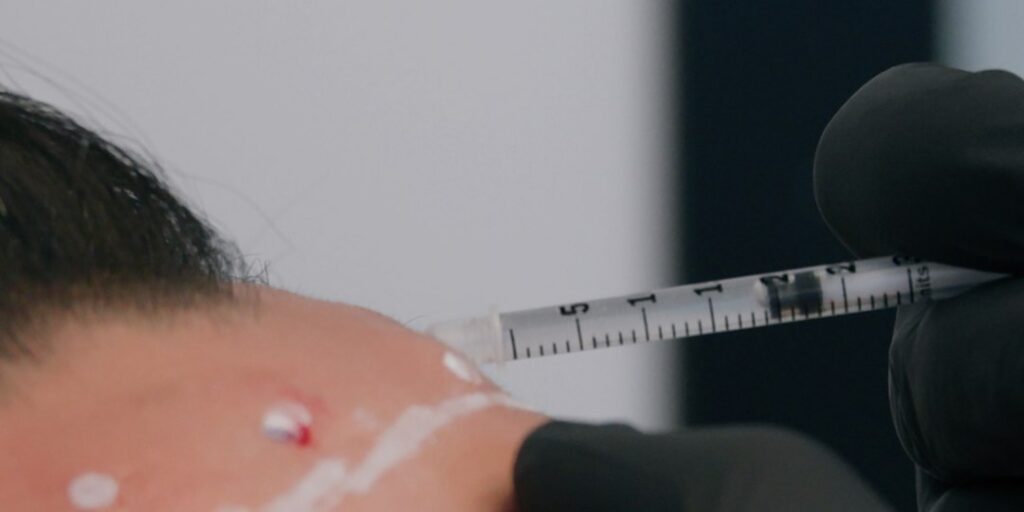
Treatment itself is quick: small amounts placed into the targeted muscles with a fine needle, brief pinches. Afterward you may have temporary bumps, redness, tenderness, swelling, or bruising at the injection sites, and we’ll go over aftercare and when to check in.
For many patients, results last approximately three to four months, though that varies by product, dose, treatment area, and the person. We’ll help you plan maintenance around your results, not a calendar someone else made up.
The fine print, because I’m a nurse practitioner first
Wrinkle relaxers work best on lines caused by muscle movement. Lines that are there at rest may soften, but they may not disappear — and texture, sun damage, and volume loss are different problems that may need a different treatment, or a combination.
Possible side effects include bruising, swelling, tenderness, headache, asymmetry, and temporary eyelid or brow drooping. Effects can rarely spread beyond the injection area and cause serious problems — seek immediate medical care for difficulty swallowing, speaking, or breathing. And treatment isn’t right for everyone: tell us about previous reactions to botulinum toxin, muscle or nerve conditions, swallowing or breathing problems, pregnancy, or breastfeeding, and treatment should not be performed through an active infection at the planned injection site. We’ll review all of that together before anything happens.
Some treatment areas are off-label depending on the product, and your provider — that’s me, or one of my nurses — will explain the proposed use, the expected benefits, and the relevant risks before treatment.
The bottom line
So — how many units do you need?
You need the number that matches your muscles, your anatomy, the areas you choose, and the amount of movement you want to keep. I know that’s not the answer the internet chart gave you. It’s the answer your face deserves.
Bring me the question in person. Let me watch your face move, and I’ll give you a real number — your number — and the exact cost, before a single unit goes in.
Shot Bar Medspa is in Lincoln Park, Chicago. Book a wrinkle relaxer consultation at shotbar.net/services/botox/ or call/text 872-273-6273.